
Paint and plaster contractors weighing decorative finishes are deciding whether to put new materials and practice time into a service they have not priced before. Profit belongs in that decision from the start.
Decorative finishes carry a higher price than base painting or base plaster, and that is the starting point for the conversation. Whether the higher price becomes a healthy margin depends on several things I will walk through here, along with a few that rest entirely with the individual contractor.
Why decorative work is priced higher
A standard repaint or base plaster job is priced on familiar ground. Square footage and number of coats set the number, along with a market rate that most clients already understand from comparing estimates. Decorative finishes follow a different path. The materials are specialty products, the application usually involves multiple steps with drying time between them, and the person applying them needs a level of skill that takes time to build. Each of those adds to the price, and together they place the work in its own category.
Clients who ask for a decorative finish are shopping for a result, such as a wall with depth that shifts as the light moves across it. Nothing else on the table looks like it, so the finish stands apart from a standard paint or plaster bid.
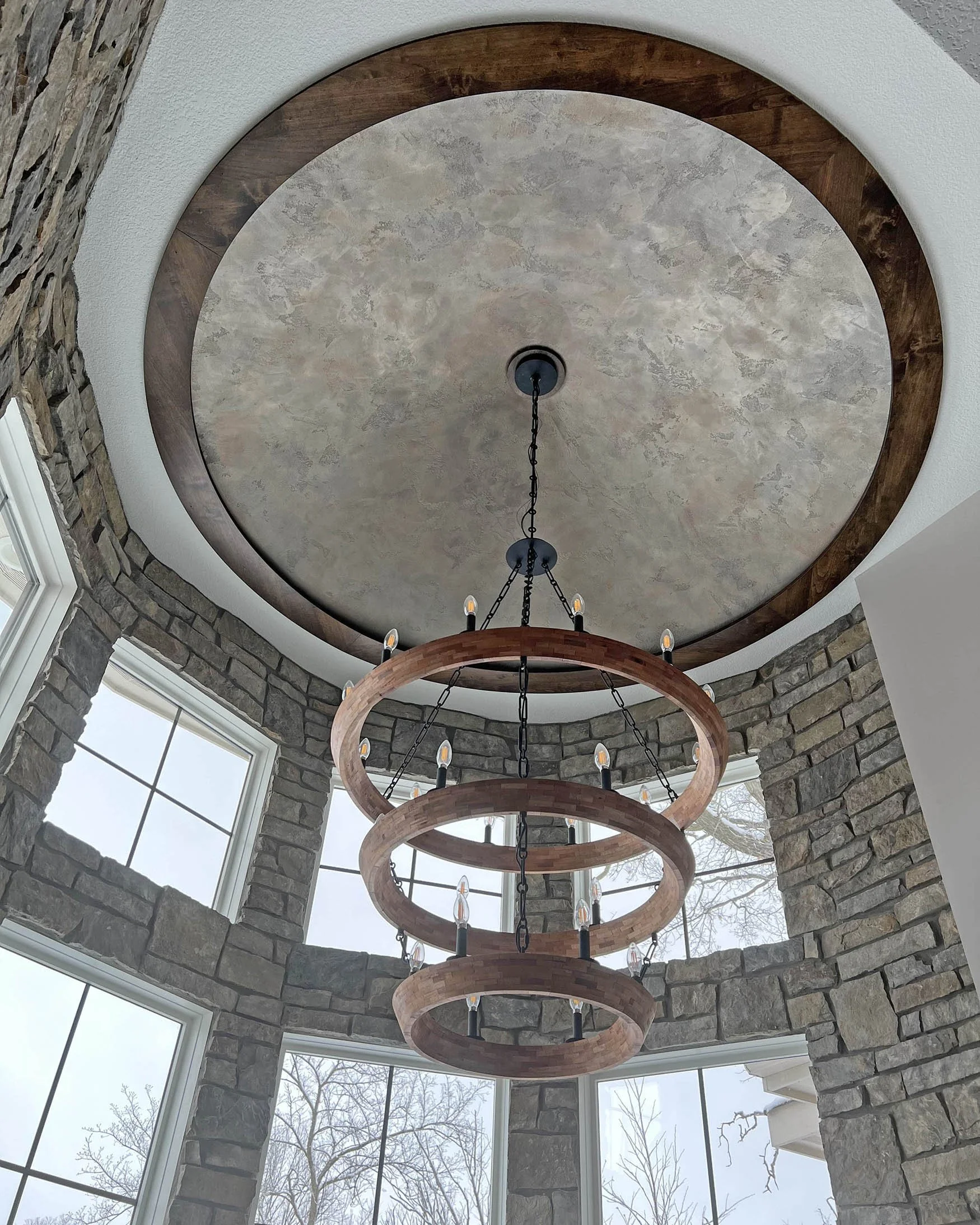
Product: Marmorino KS | Applicator: Beth Schafer
What the client sees and what goes into it
A finished decorative wall looks calm and simple, and that makes it easy to underprice. The client sees one surface. The contractor knows about the layers that went on one at a time, the drying time between them, the sample boards, and the color decisions made along the way.
Perceived labor and real labor sit far apart on decorative work, and the price has to reflect the real side of that gap. Contractors who underprice early on usually do it because the finished wall looks effortless, and the effort only shows up once the job is underway.
What affects profit on decorative work
Several factors shape the margin on a decorative job, and most of them are within a contractor's control.
Repeatability comes first. When a contractor applies the same finish again and again, the technique becomes familiar, time estimates become reliable, and reliable estimates make pricing far easier. A finish you have applied many times is quoted with more confidence than one you are trying for the first time.
Scheduling matters too. Multi-step finishes need drying time between steps, and a schedule that accounts for it lets a crew move to other work in the meantime instead of waiting on a wall.
Where you learn also counts. Practicing on a client's wall costs material and time, and sometimes means rework, which eats into a margin before the job is finished. Sample boards and small trial areas keep that cost low.
Custom work supports the price as well. Decorative plaster and finishes are developed for each wall, from the color to the layering, and that level of customization is part of why the work is priced as a custom project.
Then there is the conversation with the client. Most homeowners and designers do not know the terminology, so a physical sample and a plain explanation of what the finish is and how it is applied go a long way toward supporting the price.
What SHAPES YOUR RESULTS
Numbers belong to each business. Region, finish, project size, and local market all change what a job should cost, and results beyond that depend on the contractor's own marketing, focus, talent, and salesmanship. Two contractors can learn the same finish and see very different outcomes based on who they present it to and how consistently they deliver it.
Decorative finishes give a contractor a higher-priced service to offer, and the profit that follows depends on how it is marketed and delivered.
Starting in a way that protects your margin
Two of the starter paths from my guide to adding decorative finishes without overcomplicating your business speak directly to profitability. Offering a finish on an accent wall or in a powder bath inside a job you already have keeps the risk to a single space, and the client is already spending money. Choosing one finish and practicing it until the results are predictable makes pricing easier, since the time involved becomes known.
Either path lets a contractor learn what the work earns in their own market before committing more of the business to it.
Where training fits
Training can shorten the stretch where estimates are educated guesses. A contractor who understands how a material behaves can judge time and difficulty with more confidence, and that confidence shows up in the quote. I cover this in more detail in our post on whether you need special training before offering decorative finishes.
My training is built around what each contractor or team wants to learn, and it can happen at your location, online, or in studios in Minneapolis, Miami, New York, Los Angeles, and Knoxville. If you would like to talk through what a program could look like for your business, you can learn more and reach out here, or write to me at bethann@novacolornearme.com.
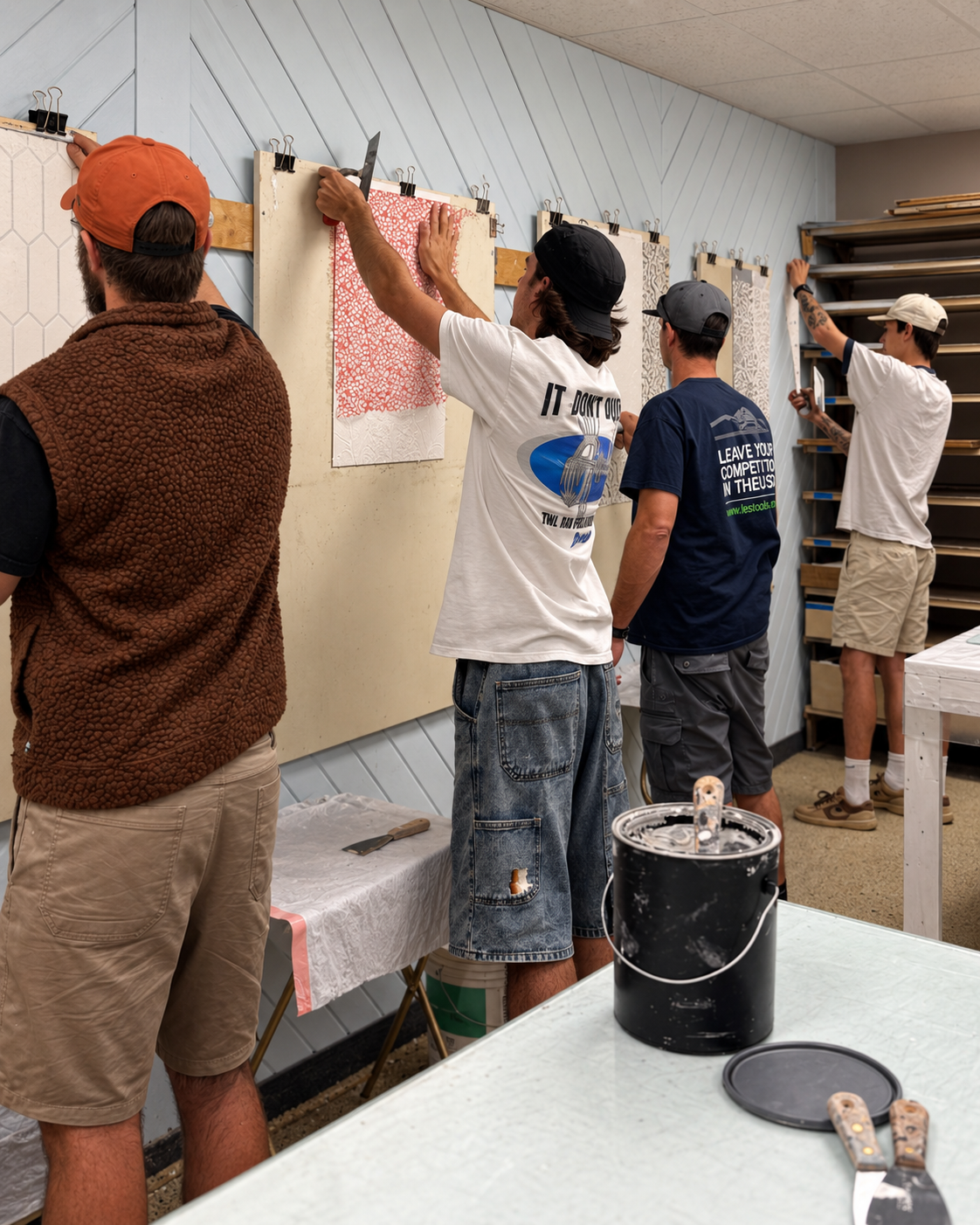
Decorative Plaster training in process.