
ONE FINISH. ONE WALL. ONE NEW REVENUE STREAM.
Decorative finishes often feel like a much bigger leap than they need to be.
Many paint contractors assume they need to offer a full catalog of specialty finishes before introducing them into their business. In practice, some of the most successful starting points are far smaller and much easier to manage. A single decorative wall inside an existing project is often enough to begin building confidence, create new conversations with clients, and open the door to higher-value work.
In my custom applicator training, I work with both paint and plaster contractors who are interested in decorative finishes but are unsure how to introduce them into their existing services without disrupting workflow, overwhelming their crew, or completely changing how they operate. Most are looking for a practical starting point that allows them to learn the materials, gain confidence, and begin offering something more elevated within the projects they are already doing.
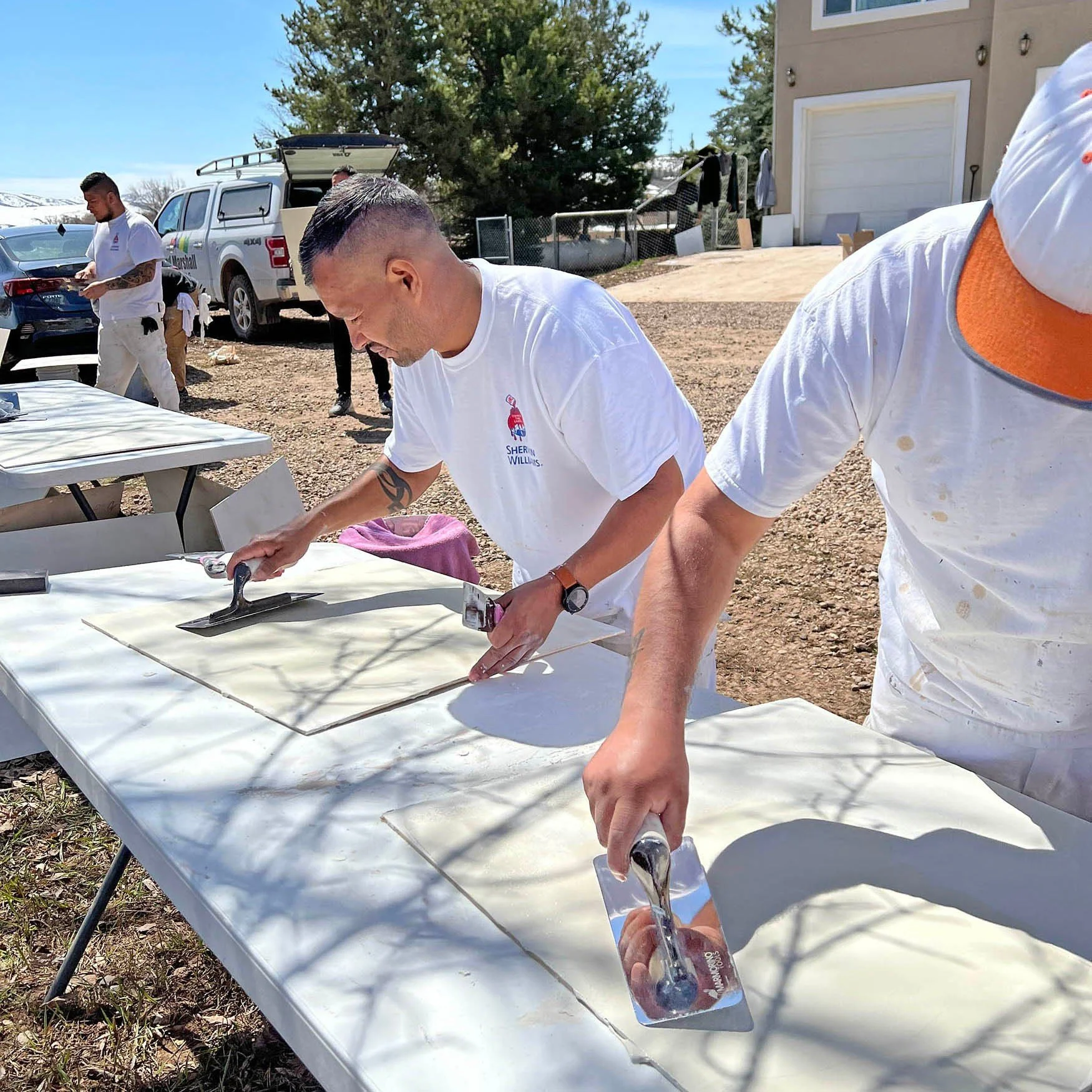
That is one reason decorative wall applications continue gaining attention in both residential and commercial interiors. While the old concept of a simple painted accent wall has shifted over the years, textured and material-driven feature walls remain very much part of current design. Designers and homeowners are looking for warmth, movement, depth, and surfaces that feel more architectural and handcrafted.
For contractors, that creates an opportunity that fits naturally into work they are already doing.
If you are interested in learning decorative finishes in a practical, business-minded way, you can learn more about my custom applicator training here.
Why Starting With One Wall Works
One-wall decorative applications make sense operationally for several reasons.
They allow contractors to:
Keep material costs controlled
Work within familiar project schedules
Introduce decorative finishes without overcommitting
Practice technique in a real-world setting
Photograph completed work for future marketing
Most importantly, a smaller application creates room to learn comfortably. Contractors and crews can focus on understanding the finish itself without the pressure of transforming an entire home or commercial space at once.
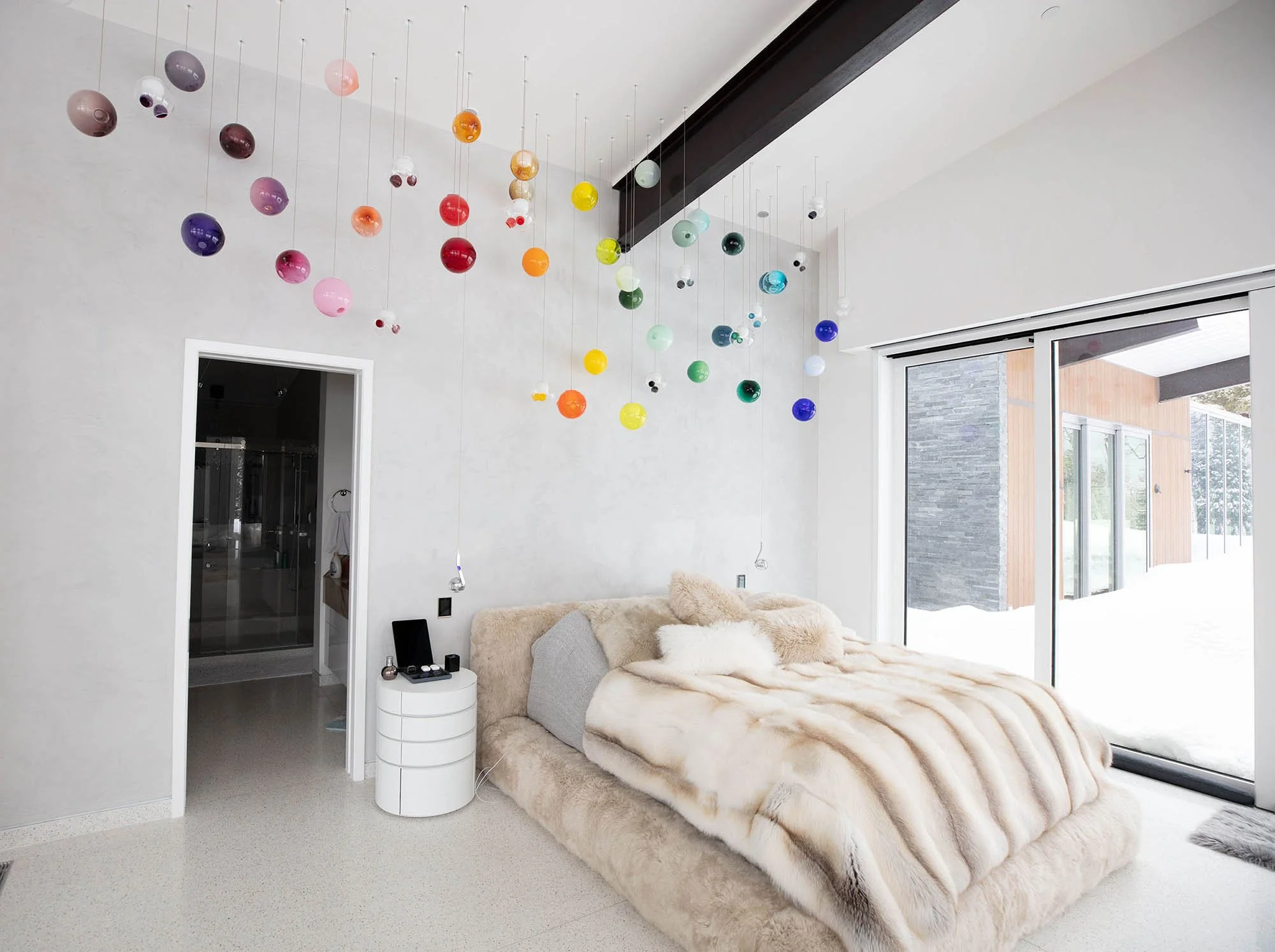
This is often where decorative finishes begin to feel more approachable.
A dining room wall, fireplace surround, powder bath, entryway, or built-in feature can deliver a significant visual impact while still fitting naturally into a repaint or renovation project.
Clients Are Looking for More Texture and Materiality
Over the past several years, interiors have steadily moved toward surfaces that feel softer, warmer, and more layered. Decorative plasters and mineral-based finishes bring a level of depth that standard flat paint cannot always achieve on its own.
That does not mean every client is searching for dramatic statement walls. In many cases, the finishes that resonate most are subtle. Gentle movement, tonal variation, soft texture, and finishes that respond differently throughout the day as light changes across the surface often feel more timeless than bold contrast colors.
For contractors, this creates a valuable middle ground.
Decorative finishes can feel elevated and custom without requiring clients to make an extreme design decision. A textured plaster wall in a neutral palette often feels easier for homeowners to embrace because it adds character while still remaining versatile within the space.
One Finish Is Enough to Start
One of the most common mistakes contractors make when exploring decorative finishes is trying to learn too many techniques at once.
The better approach is usually much narrower.
Choosing one finish and learning how to apply it consistently creates a far more manageable starting point than attempting to offer every decorative look immediately. Once a contractor becomes comfortable with a single finish, several things begin to happen naturally:
Pricing becomes easier
Crew confidence improves
Client conversations become smoother
Marketing starts to feel more focused
Applications become more repeatable
This is especially important for contractors balancing production schedules and existing client work. Decorative finishes should support the business, not disrupt it.
A clean plaster finish, subtle concrete-style surface, or mineral-based textured wall can become a strong entry point because the finish feels modern, flexible, and broadly appealing across different project types.
Decorative PLASTER Finishes Create Better Conversations
One unexpected advantage of decorative wall applications is how naturally they create conversation during the estimating process.
Rather than presenting decorative plaster finishes as a completely separate service category, contractors can introduce them as an optional upgrade within spaces clients are already discussing. A homeowner repainting a dining room may not initially ask for decorative plaster, but once they see a sample or understand the visual effect, the conversation changes.
The project begins to feel more custom.
This approach also removes some of the pressure contractors feel around selling decorative finishes. Instead of aggressively upselling, the contractor is simply presenting another option that may fit the space and the client’s goals more effectively.
That tends to feel more comfortable for everyone involved.
Training Helps Shorten the Learning Curve
Decorative finishes are highly tactile. Timing, pressure, layering, movement, and product behavior all influence the final result, which is why hands-on guidance can make such a difference early on.
Many contractors spend time watching online videos and collecting inspiration images but still hesitate when it comes time to apply the material on an actual project. Training helps bridge that gap between interest and execution.
Training also helps contractors narrow their focus, which is important early on. One of the most common things I see is contractors trying to learn too many finishes at once. Decorative work becomes much more manageable when you start with one finish, understand how the material behaves, and learn where it fits best within your market and project types.
That is the approach I take in my custom applicator training. Rather than overwhelming contractors with every possible technique, I focus on helping professionals understand materials, build application confidence, and learn how decorative finishes can fit realistically into the business side of day-to-day operations.
For many contractors, that practical understanding is what transforms decorative finishes from “something interesting” into a service they feel prepared to offer confidently.
If you are considering decorative finishes as part of your painting or plaster business, starting with one finish and one well-placed wall may be the most practical first step available. If you’d like to train with me, learn more about my custom applicator training here.